Phones Are Ringing. See Data on Every Call
What happens after a patient calls your practice? For most dental practices, the data goes dark. The Call Insights Dashboard changes that. It automatically scores every call so you can close the conversion gap and turn your existing call volume into measurable revenue.

Your practice has invested real money to make your phones ring. You've got ads, SEO, and a website that shows off how life changing your care can be. It's all designed to do one thing: bring in new patients.
Here's the uncomfortable truth we see at practices every day: the phones are ringing, but most practice owners have no idea whether that investment is actually working.
Think of it like this. You've just taken a full-mouth set of X-rays. You've done the work. But then you hand them to someone else, walk out of the room, and never find out what the diagnosis was. That's what happens the moment a patient picks up the phone. The data goes dark.
Is the caller a good fit? Did your team handle the call in a way that made them want to book? If they didn't book, why not?
Those questions go unanswered every single day. Not because nobody cares. Because the data has never existed to answer them.
Until now.
The Gap Most Practices Never See
Okay, these numbers are worth sitting with for a minute.
More than 1 in 3 calls to dental practices go unanswered during regular business hours. (Weave Communications, 2025)
The average practice loses $100,000 or more per year from unanswered calls alone, based on a lifetime patient value of $8,000 to $10,000. (Dentina.ai / DenteMax, 2025)
And of the new patient calls that do reach a live person, only 53% result in a booked appointment. (Patient News, analysis of 2M+ calls)
Top-performing practices convert 85% of those same answered calls. (Patient News, 2025)
That gap, 32 percentage points, means if you're handling 100 new patient calls per month, you could be booking 32 more. At a lifetime patient value of $4,500 (The Scheduling Institute, 2026), that's $144,000 in new patient revenue every month. No new ad spend. No new campaigns. Just converting the patients you're already reaching.
The strangest part? Most practices have no idea the gap exists.
A missed call leaves no trace. A mishandled call looks no different in your data than a patient who chose a different practice for reasons you could never control. It just feels like a slow week.
It's like a restoration that never got placed. The prep work is done. The impression was taken. And then somewhere between the lab and the chair, the case just… disappears. You don't always know where it went. You just know the patient didn't come back.
"Closing the conversion gap can more than double booked new patients from the same call volume, with no extra marketing spend required."
— HelpSquad Dental Case Study, 2026
You Can't Improve What You Can't See
Your marketing reporting probably tells you a lot. Clicks, website visits, keywords driving traffic, which campaigns are generating calls. That's where the trail ends.
Your marketing's job is to make the phone ring. Your front desk's job is to turn that ring into a booked appointment. Those are two completely different jobs, and a problem in either one costs you patients.
What most practices rely on instead: occasional spot-checks of recordings that are never systematic, front desk training based on gut feel rather than data, and no real way to know whether the callers reaching them are high-quality leads, or why those leads aren't booking.
Critical staffing, training, and campaign decisions get made based on a tiny, non-representative slice of actual call data, often weeks after those calls happened.
That's like adjusting your treatment plan based on one patient's chart while ignoring the other forty sitting in your filing cabinet.
There's a better way to run the diagnosis.
What the Call Insights Dashboard Does
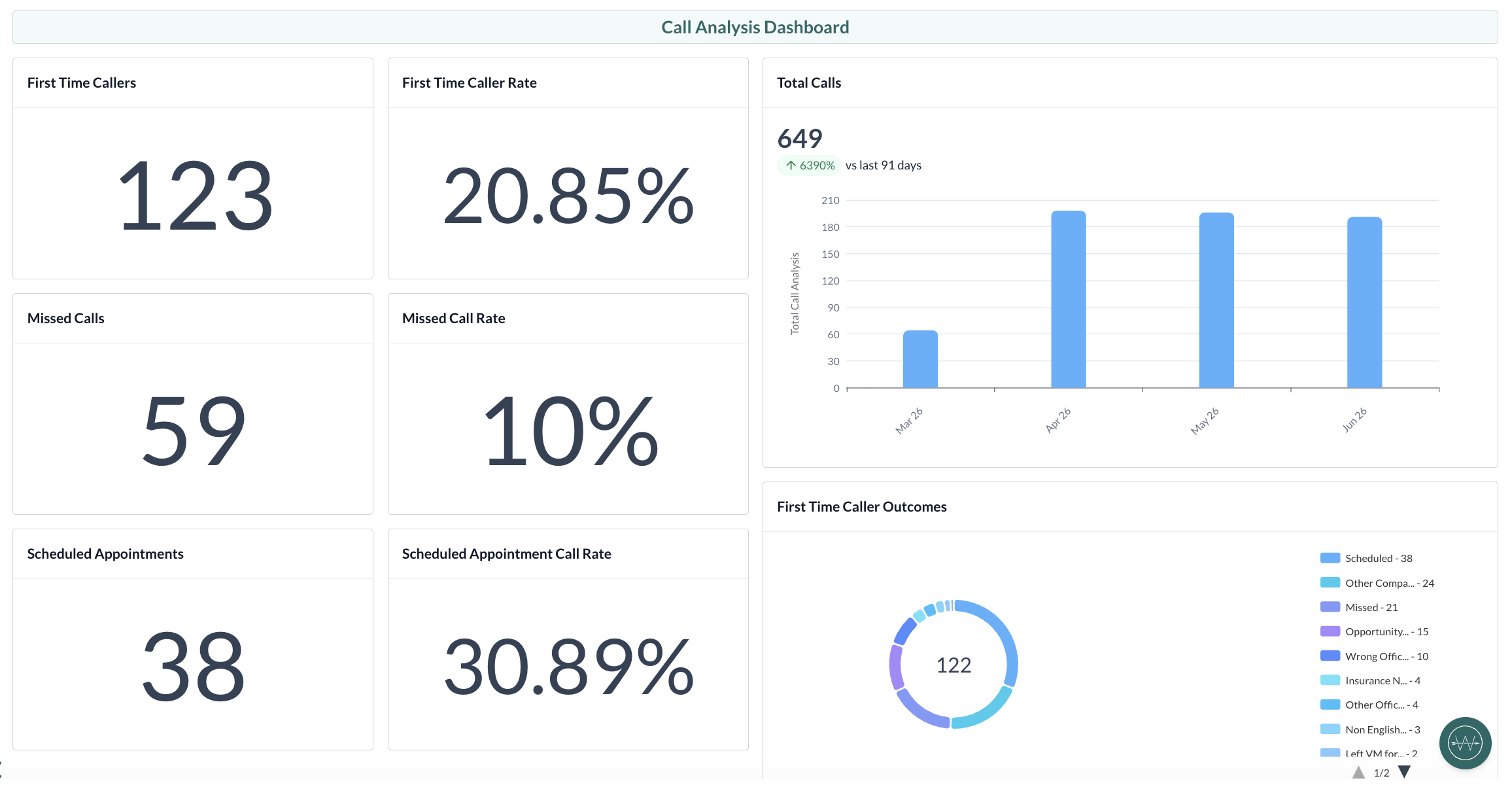
We built the Call Insights Dashboard into The Wonderful CRM, our proprietary dental marketing platform, specifically because this was the gap we kept seeing.
It automatically transcribes and analyzes 100% of your incoming calls within minutes of each one completing. No manual effort. No sampling. No one reviewing recordings by hand.
Every call produces a structured audit with 19 data points, a full transcript, and two AI-generated scores. It's always current, always on, and filterable by traffic source, so you can see exactly where leads are converting and where they're not.
Call tracking tells you which marketing made the phone ring. The Call Insights Dashboard tells you what happened when your team picked up. But knowing a call came in is only half the story, the half that actually fills your schedule is what happens in the next three minutes.
Most practices have never had a consistent, objective way to measure that. Until now.
Two Scores That Change Everything
Every eligible call receives two AI-generated scores, both applied using consistent scoring criteria — the same rubric, every call, every agent.
Agent Score (1–100): Is Your Front Desk Converting?
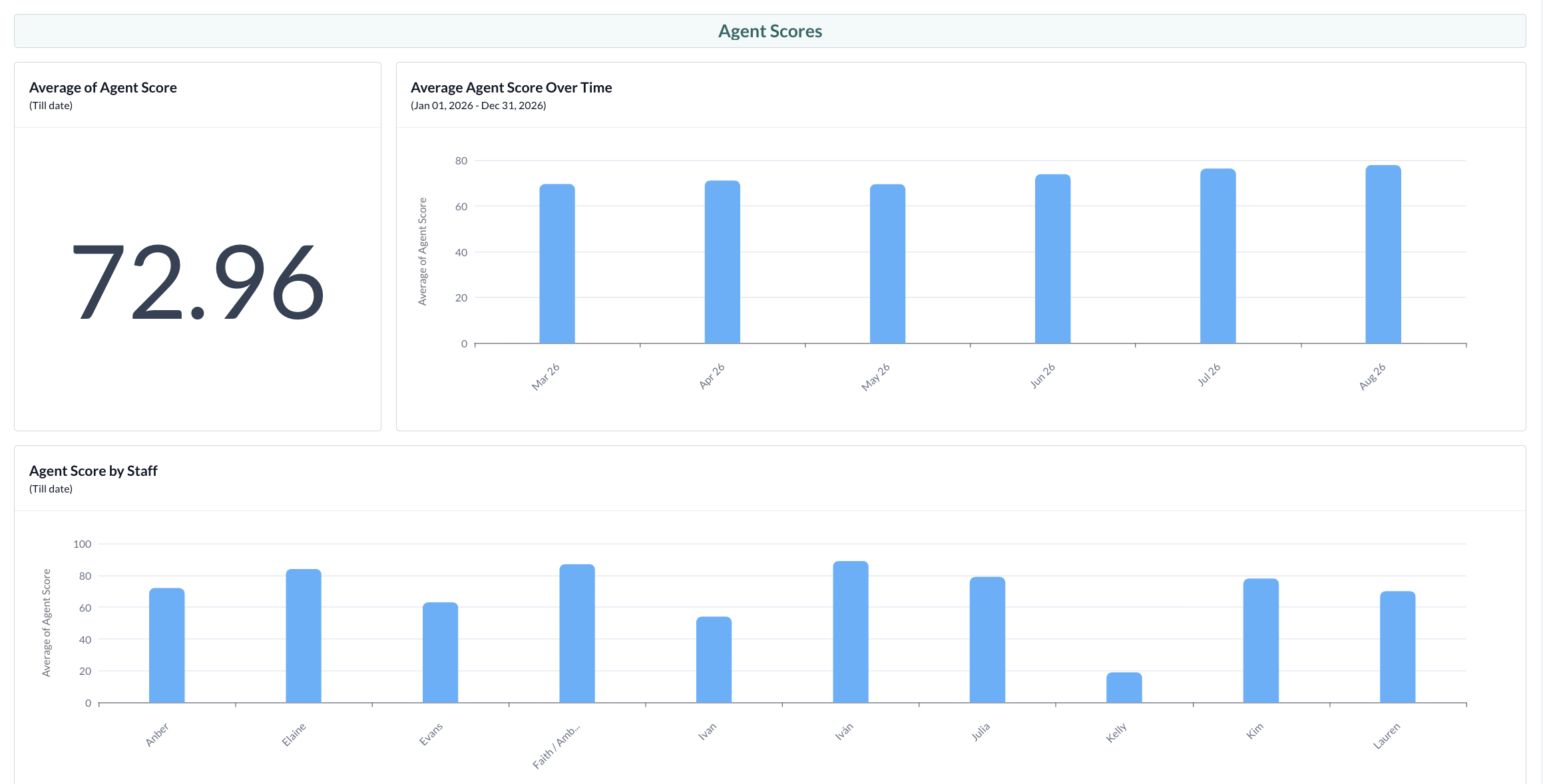
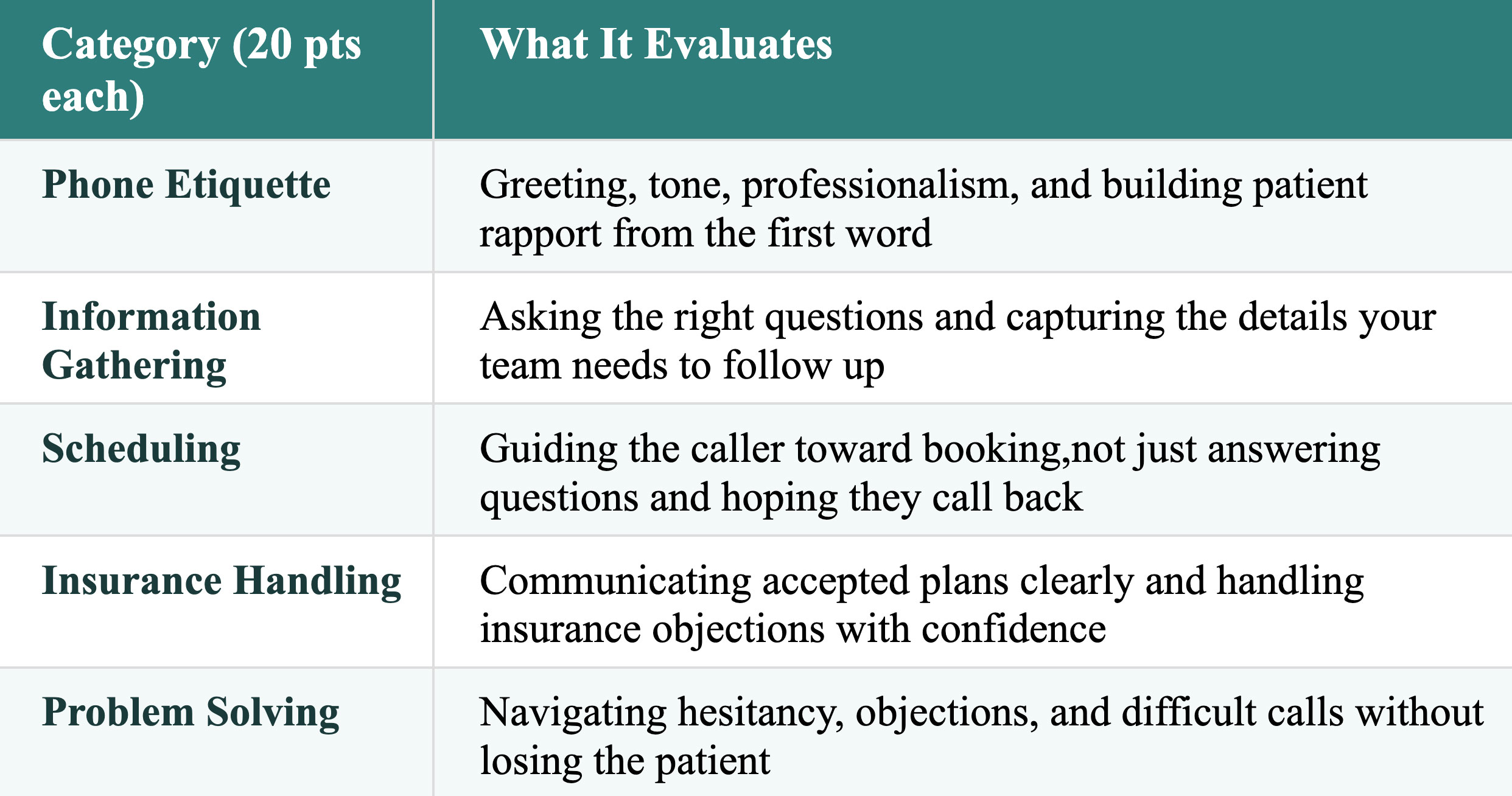
The Agent Score measures call-handling quality across five equally weighted categories: phone etiquette, information gathering, scheduling, insurance handling, and problem solving. Each is worth 20 points.
When scores consistently underperform in a specific area, you have objective, data-backed evidence to support a precise coaching conversation. Not a vague impression. Not a manager's memory of one call from three weeks ago. A measurable pattern across every call your team has taken.
It's the difference between telling your assistant "I feel like you're rushing patients off the phone" and showing them: here are the 14 calls this month where we lost points on scheduling, and here's exactly why.
Research analyzing 12.5 million patient interactions (Patient Prism, 2026) found that front-desk teams trained to keep calls short actually hurt conversion — converting new patient calls at 21% lower rates than teams trained to prioritize conversation quality. The Agent Score tells you exactly where that quality is breaking down, before it shows up in your revenue.
Lead Score (1–100): Is Your Marketing Attracting the Right Patients?
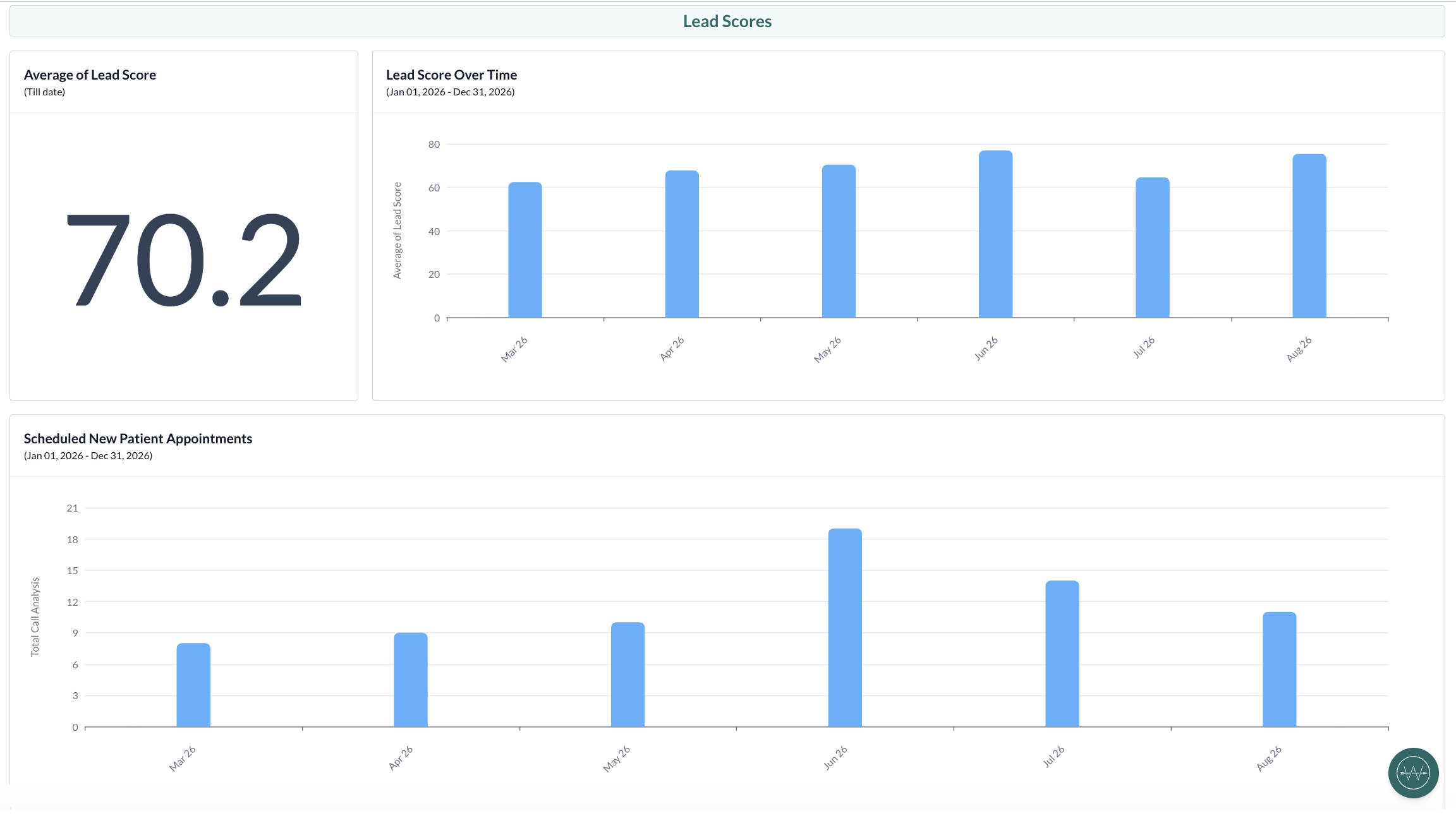
The Lead Score evaluates the quality of each incoming caller across three dimensions: service fit (35 pts), insurance fit (35 pts), and scheduling intent (30 pts). Insurance fit is pulled directly from your practice profile, so the system already knows which carriers you accept.
Filter by traffic source and you can see exactly how your paid search calls compare to your Google Business Profile calls — and make campaign decisions based on lead quality, not just call volume.
Think of it like case acceptance data. If you're presenting a lot of treatment and not closing, you don't just shrug and assume patients aren't interested. You look at where the breakdown is happening. Low lead scores work the same way, they tell you there's a targeting or creative issue long before it shows up in your revenue.
That's the difference between reacting to a bad month and catching a problem in week two.
The Spam Problem Nobody Talks About (But Everyone Has)
Almost every practice using a Google Business Profile tracking number deals with the same quiet problem: bots and automated dialers scrape those numbers and flood them with junk. Robocalls. Vendor solicitations. Automated noise.
Some practices see ten or more spam calls per day from a single tracking number.
When spam mixes into your call data, the numbers tell the wrong story. Volume looks higher than it is. Conversion rates look lower. Real patients, people actually looking for a dentist, get buried in the noise.
The old workaround was replacing the GBP tracking number: a multi-step process with no guarantee the new number wouldn't end up on the same spam lists within weeks. Some practices have done it six or more times.
Call Insights automatically filters out GBP spam before it touches your metrics. Your call volume reflects real patient inquiries. Your scores are calculated on legitimate calls only. No setup, no maintenance, no number swaps.
When to Pull It Up
The dashboard is live and accessible anytime, and your Wonderist team reviews it with you every month. But three moments make it especially valuable.
At the 30 and 60-day mark of any new campaign. Pull Call Insights to confirm targeting is reaching the right patients and that your front desk is ready for the volume. It's the earliest possible signal that something's off and the cheapest time to fix it.
In monthly and quarterly reviews. It closes the loop from first click to booked appointment, giving you a complete picture instead of stopping at the impression or the call.
Whenever appointment numbers are flat despite strong campaign metrics. That's usually where the answer lives. Review the calls before concluding a campaign isn't working. The problem is rarely the ad.
Marketing You Can Prove Is Working
Most marketing reporting stops at the click. That's like a dentist handing a patient a treatment plan and calling it a success before they've even sat down in the chair.
The click is just the appointment. What happens next is where the real work is.
Call Insights closes the loop by connecting your ad spend to what actually happens when a patient picks up the phone. No more guessing. No more "I think it's working." No more slow weeks that nobody can explain.
If you've ever had that nagging feeling that your phones should be producing more than they are, you're probably right. And now you can actually find out.
The best practices don't just track production — they track every step that leads to it. You can't fix what you can't see, and you can't grow what you can't measure.
That's the difference between marketing you hope is working and marketing you can prove is working.
Ready to find out what's really happening on your calls? We'd love to show you. Talk to our team at wonderistagency.com/contact-us.
Topics
