How to Choose a Dental Marketing Partner: 10 Things to Look For
Choosing who runs your practice’s marketing is a big decision. Here are 10 things to look for, and the questions to ask, before you sign with anyone.

By Michael Anderson, Co-Founder at Wonderist Agency
You wouldn’t refer a patient to a specialist you’d never vetted. You’d want to know where they trained, how they communicate, and how they treat the patients you send their way.
Choosing a marketing agency deserves the same scrutiny. This is a partner you’re trusting with your brand, your budget, and the steady flow of new patients your practice depends on. And yet plenty of practices still choose one based on a smooth pitch and a promise to “get you to page one.”
Since Wonderist was founded in 2013, we’ve worked with more than 1,200 dental practices. Many of them came to us after an agency relationship that didn’t deliver. And the pattern is hard to miss: the practices that end up happiest with their marketing are the ones that asked better questions up front.
None of what follows is a nice-to-have anymore. Patients now research, compare, and decide before they ever pick up the phone, so each of these ten is a basic requirement for marketing that actually brings in patients. A partner that skips one is leaving patients on the table.
Here’s a list worth bringing to every agency conversation. Ten things to look for, plus the questions that separate real answers from rehearsed ones.
1. They Speak Dentistry
A generalist agency can run a decent campaign for a plumber, a pizza place, and a law firm in the same week. But dental marketing has its own rules. Insurance versus fee-for-service. The difference between a hygiene patient and an implant case. Patients who are anxious, price-sensitive, or both.
An agency that works with dental practices every day already knows this. You won’t spend the first three months teaching them what a crown is.
Ask: How many of your clients are dental practices? Can you show me work for a practice like mine, in size, specialty, and market?
2. They Track All the Way to Revenue
Clicks, impressions, and rankings are useful. They’re also not the point. Judging your marketing by traffic alone is like judging your hygiene program by how many people walked into the lobby. Revenue tracking used to be a premium extra. Today it’s the baseline for knowing whether your marketing works.

The number that matters is how many new patients your marketing produced, and what those patients are worth. By our own numbers, a typical general dentistry patient is worth around $4,000 over seven to eight years, and an implant or cosmetic patient can be worth $18,000 or more (here’s what a new patient is really worth). The strongest agencies connect directly to your practice management software, so they can trace marketing all the way to booked appointments and collected revenue. At Wonderist, we do this through practice management integration.
Ask: How will we know which campaigns brought in new patients, and how much revenue they produced?
3. They Care What Happens After the Phone Rings
Call Analysis Dashboard
First time callers
123
First time caller rate
20.85%
Missed calls
59
Missed call rate
10%
Scheduled appointments
38
Scheduled appointment call rate
30.89%
Total calls
649
First time caller outcomes
- Scheduled (38)
- Missed (21)
- Wrong office (10)
- Other outcomes (53)
From the Call Insights Dashboard in The Wonderful CRM
Most marketing reporting stops when the phone rings. That’s exactly where a lot of new patients get lost: a missed call, a rushed conversation, a lead that comes in through a web form and never gets a follow-up.
A great agency treats call handling and lead follow-up as the most important part of the job, not somebody else’s problem. That means looking at what happens on every call, not just counting how many came in. At Wonderist, we do this with our Call Insights Dashboard, built into The Wonderful CRM. It scores every call automatically, so you can see exactly where front desk coaching would make the biggest difference. Patients compare several practices before they call now, so a missed or rushed call is harder to win back than it used to be.
Ask: Do you track what happens on calls, or only how many calls came in? What happens to web leads after they’re submitted?
4. You Can See Your Data Anytime
You shouldn’t have to wait for a monthly PDF to know how your marketing is doing. Look for an agency that gives you a live dashboard with the same numbers they see.
Your marketing dashboard
New leads
210
▲ 2% vs. last month
Appointments booked
112
▲ 10%
New patients
82
▲ 2%
New patient production
$61.8K
▲ 4%
Leads by source
New patients by month
Why it moved
Google Ads brought in about half your leads, and appointments rose 10% as more of those leads booked.
What we did
Shifted budget toward implant searches and sped up lead follow-up, so more leads booked.
What's next
Keep follow-up fast and watch whether lead volume recovers next month.
Demo data for illustration
But access to data isn’t the same as understanding it. A report full of green and red arrows tells you something changed. It doesn’t tell you why, or what to do next. That’s like handing a patient their X-rays with no diagnosis.
A strong monthly report reads like an analysis, not a scoreboard. For example: calls dipped this month because a competitor ramped up ads in your area, so budget shifted toward implant searches, where you’re still winning. It should connect every number to what was done, what’s working, what isn’t, and what happens next, in plain English.
If an agency can’t or won’t show you the raw data, ask why. Transparency is the baseline, not a bonus.
Ask: Can I log in and see my results whenever I want? Can you walk me through a sample monthly report and show me how it explains why the numbers moved?
5. A Strategy Built Around Your Goals
A startup practice trying to fill the schedule needs something different than an established practice that wants more implant cases. If the agency’s proposal looks like it could have been sent to any practice in America, it probably was.
The right partner asks about your goals before it talks about its services. Which procedures do you want more of? Which patients do you love seeing? Where do you want to grow?
Ask: What would you do differently for my practice than for the last practice you signed?
6. Creative That Looks and Sounds Like You
Stock photography is everywhere, which is exactly why it doesn’t work. The same smiling model has appeared on hundreds of dental websites. Patients can tell.
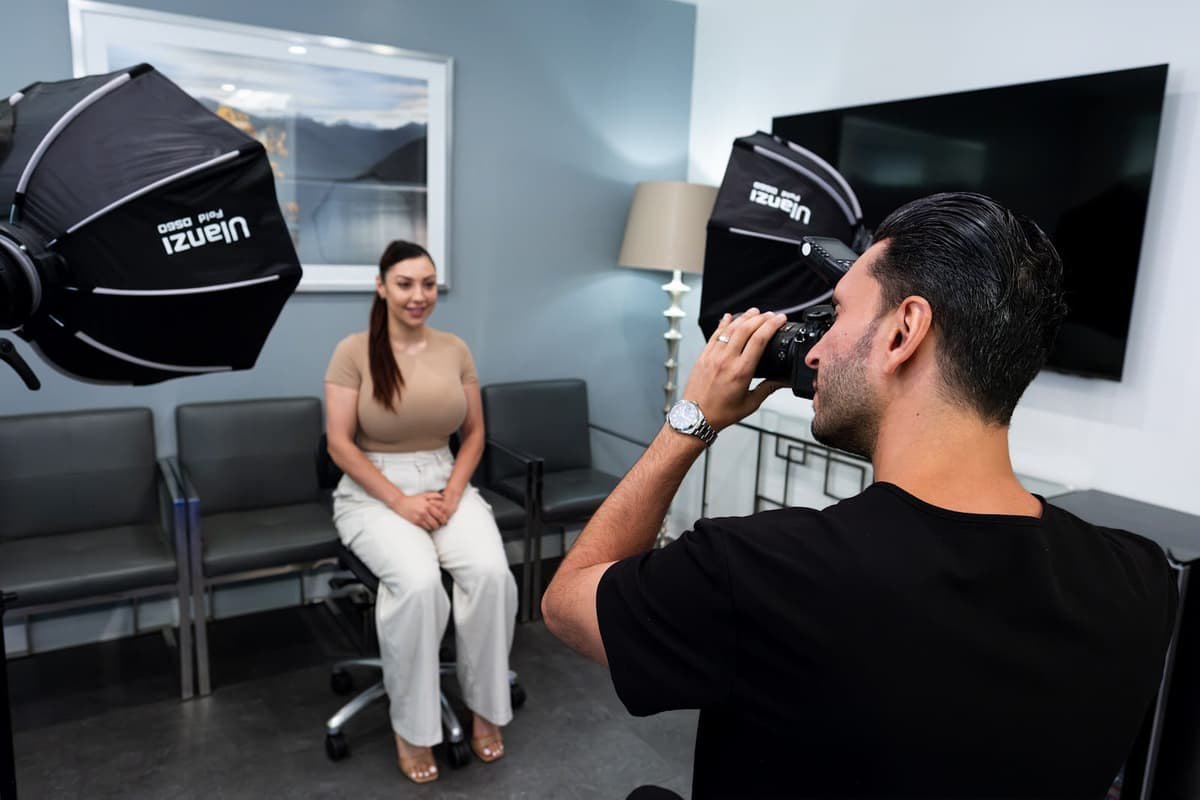
Your practice has a team, a space, and a personality that nobody down the street can copy. A good agency captures that with real photography and video and a brand that feels like you, not a template.
Ask: Who creates the photos, video, and copy? Will our marketing feature our actual team and office?
7. Channels That Work Together
SEO, Google Ads, social media, and your website shouldn’t operate like separate departments that never talk. A patient might see your ad, check your reviews, ask AI about you, and finally book from your website. Every touchpoint should tell the same story. Patients move between all of these before they book, so channels that don’t work together leave gaps another practice will fill.
When one agency handles the full picture, insights from one channel make the others better. Questions patients ask on the phone become website content. The Google searches that bring in the most patients through your ads tell you what to focus on in SEO. Nothing falls through the cracks between a website company, an SEO firm, and an ads agency that never talk to each other.
Ask: How do your SEO, paid ads, and creative teams share what they learn? Who sees the whole picture?
8. They’re Paying Attention to AI Search
Patients are increasingly asking AI tools like ChatGPT, or reading Google’s AI-generated summaries, before they ever visit a website. That changes how practices get discovered.
You don’t need an agency that chases every shiny new trend. You need one that knows where your practice shows up in AI-generated answers and has a plan to improve it. Not long ago, this was a nice-to-have. Now it’s part of how new patients find you.
Ask: How does my practice currently appear in AI search results? How would you check, and what would you change?
9. You Know Who Owns the Work
Some agencies sell the work and then pass it along with no one on their own team truly responsible for the result. When something goes wrong, nobody owns it.

Look for an agency whose own team does the core work, from strategy and design to SEO and paid media, with an experienced specialist overseeing every part and answering for its quality.
Some practices hire a local generalist so they have someone to shake hands with. What they’re really after is accountability: a consistent contact who picks up the phone, knows your practice, and walks you through results. That doesn’t require a shared zip code.
Ask: Who will be my day-to-day contact, and how often will we review results together? How much of the work does your own team do, and who is responsible for its quality?
10. Proof From Practices Like Yours
Any agency can say it gets results. The good ones can show you.
Look for case studies with real numbers, reviews from current clients, and examples from practices similar to yours in specialty and market size. A great agency will happily connect you with a client to talk to directly.
Ask: Can you share a case study from a practice like mine? Can I speak with a current client?
The Right Partner Makes the Questions Easy
Every item on this list matters. You’re looking for an honest picture of how an agency handles each one, and whether the people across the table can explain it clearly.
A great agency won’t flinch at any of these questions. In fact, it’ll probably be glad you asked. The ones that get vague, change the subject, or promise page one by next month are telling you something too.
And if you already have a marketing partner, don’t wait for a renewal to ask. Walk through this list with them. For each item, ask how they’re approaching it and what they’re actively doing about it right now, not just whether it’s included in your plan.
At Wonderist, we’ve spent more than a decade building the kind of dental marketing agency described here: dental-only, specialist-led, and accountable to booked patients and real revenue. But whoever you choose, choose with your eyes open.
If you’d like to see how we’d answer every question on this list, we’d love to show you. Explore our dental marketing services or talk to our team at wonderistagency.com/contact-us.
About the Author

Michael Anderson
Co-Founder, Wonderist Agency
Michael co-founded Wonderist Agency and helped grow it from a two-person venture into a team trusted by more than 1,200 dental brands, with seven straight years on the Inc. 5000. Before Wonderist, he worked in growth and online marketing at a Fortune 500 healthcare incubator, and today he focuses on pairing standout creative with ROI tracking tied to practice management software.
Topics
